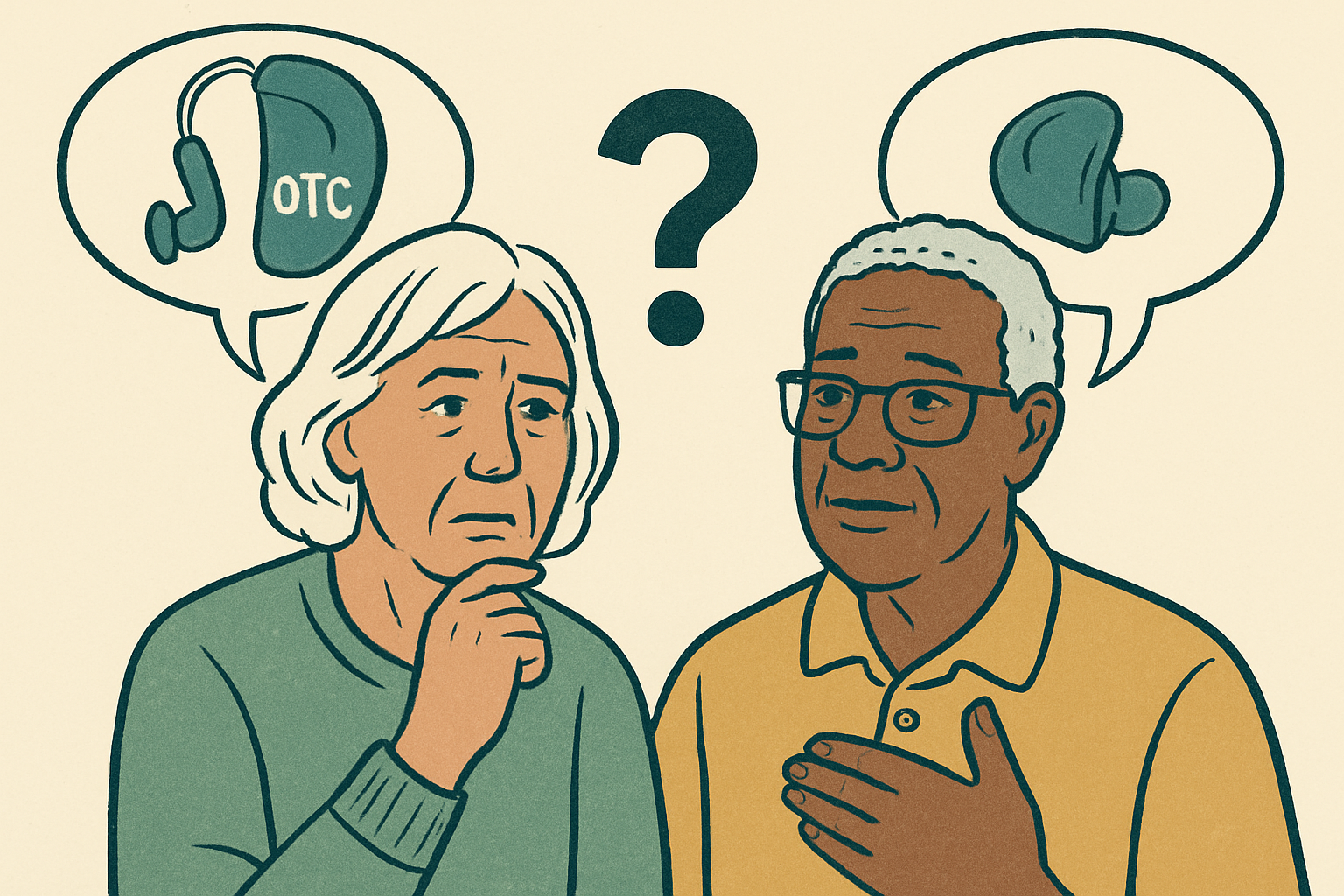
Since the FDA cleared over-the-counter hearing aids for adults with mild-to-moderate hearing loss in 2022, the market has grown quickly and the questions haven't slowed down. Should you pick up a pair at the pharmacy, or go through a full audiological evaluation and get devices fitted by a professional? The honest answer is: it depends on the person — and most articles won't tell you the real trade-offs on either side.
This guide does. We'll explain exactly how each path works, what you give up and what you gain, and walk you through a straightforward framework to help you (or the family member you're helping) make a confident decision.
Quick navigation
If you're short on time, skip to the decision framework at the bottom — it's a 4-question flow that will narrow down your choice in under a minute.
The two paths compared at a glance
Every hearing aid available today falls into one of two regulatory categories. Understanding what those categories mean in practice is more useful than any brand comparison.
| Feature | OTC Hearing Aids | Prescription Hearing Aids |
|---|---|---|
| Who it's for | Perceived mild-to-moderate hearing loss in adults 18+ | Any degree of hearing loss, all ages |
| Audiogram required | No | Yes — full evaluation by audiologist or HIS |
| Fitting & programming | Self-fitted via app or manual controls | Professionally programmed to your audiogram |
| Typical cost | $200–$1,600 per pair | $2,000–$7,000+ per pair (bundled with services) |
| Follow-up care | Limited; varies by brand | Included adjustments, cleanings, and check-ins |
| Trial period | Usually 30–45 days | 30–60 days, typically |
OTC hearing aids
Over-the-counter devices are designed to be purchased, fitted, and adjusted by the user without a clinic visit. Most come with a companion smartphone app that lets you tune amplification, adjust frequencies, and toggle noise-reduction programs. A handful of models — including some we've reviewed in our Best OTC Hearing Aids guide — offer genuinely good sound quality for the right candidate.
Pros: Lower upfront cost, no appointment needed, fast access, good for people with predictable mild hearing difficulty.
Cons: Self-fitting is harder than it looks; no professional baseline to work from; unsuitable for moderate-to-severe loss; limited follow-up support.
Prescription hearing aids
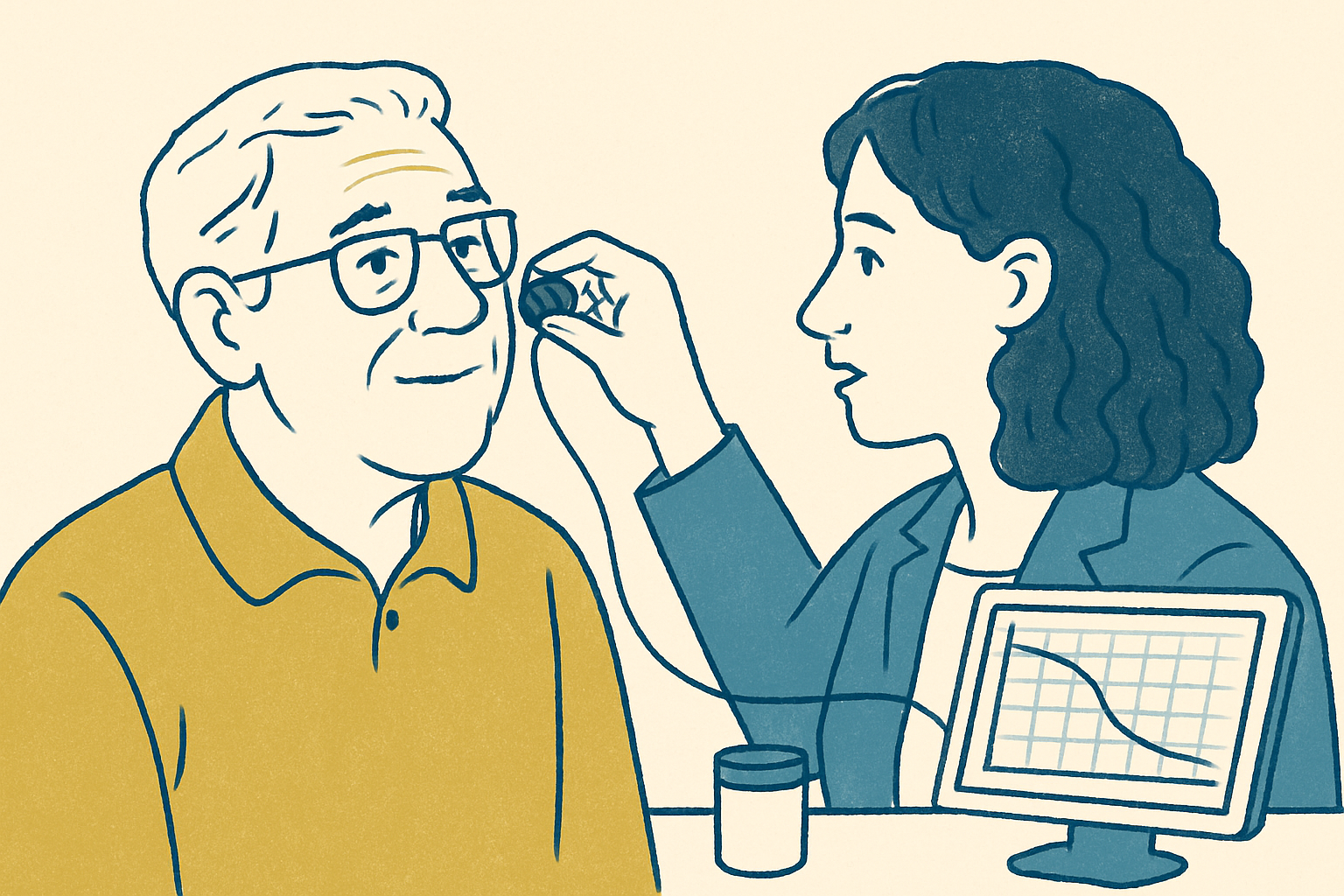
Prescription devices are programmed by a licensed audiologist or hearing instrument specialist using measurements from your audiogram — specifically, real-ear measurements that confirm the device is delivering the right amount of sound for your individual ear anatomy. This isn't a formality; research consistently shows professionally fitted devices perform better for the wearer than self-fitted equivalents, even when the underlying hardware is similar.
Pros: Precisely calibrated to your actual hearing loss; professional guidance through adjustment period; ongoing care included in bundled pricing.
Cons: Higher cost; requires appointments; access can be limited in rural areas.
The cost question — what you're actually paying for
The price gap between OTC and prescription devices looks dramatic on paper. But bundled prescription pricing usually includes several years of follow-up appointments, adjustments, cleanings, and loss-and-damage warranties. When you unbundle those services, the hardware cost of prescription devices is often closer to OTC pricing than the sticker suggests.
If you purchase an OTC device and then pay out of pocket for periodic check-ins with an audiologist — which is genuinely a good idea — the total cost difference narrows further. The right question isn't "which costs less?" but "which delivers more value for my situation?"
What about follow-up care?
This is the part most comparison articles skip. Hearing aids are not a buy-and-forget product. Research on first-time wearers consistently shows that people who receive structured follow-up — at least two or three appointments in the first six months — report significantly better satisfaction and continued use than those who don't. New wearers often need frequency adjustments, different dome sizes, or help with a specific listening environment like a noisy restaurant or a telephone call.
OTC brands vary widely on this front. Some offer remote audiologist consultations as a paid add-on. Others provide chat support only. Before buying any OTC device, check specifically what support is available after the sale — not just during the return window.
Clinical perspective from Dr. Ellsworth
"The biggest mistake I see is people with moderate-to-severe loss buying an OTC device because the price felt safer. OTC devices are not designed for that degree of loss — they simply don't amplify enough, and wearers end up frustrated and convinced hearing aids 'don't work' for them. If someone isn't sure of their degree of loss, a baseline hearing test is the single most important first step, and many audiologists offer them at low or no cost."
A four-question decision framework
Work through these questions honestly. They'll point you in the right direction without requiring a clinic visit first.
- Do you know your degree of hearing loss? If you've never had a hearing test, get one before buying anything. OTC devices are only appropriate for mild-to-moderate loss — buying one for severe loss is a common and costly mistake.
- Is your hearing loss relatively symmetrical in both ears? If one ear is significantly worse than the other, or if you have sudden, one-sided, or rapidly worsening loss, see an audiologist. These patterns can signal medical conditions that need evaluation before any device is fitted.
- Are you comfortable adjusting technology via a smartphone app? OTC devices require meaningful self-management. If that sounds frustrating rather than empowering, a professionally fitted device with ongoing support will likely serve you better — and you'll actually wear it.
- What's the full budget, including follow-up care? If you're considering OTC, budget for at least one follow-up session with an audiologist to verify fit and settings. If you're considering prescription, ask whether the quoted price includes multi-year follow-up or just the first year — the answer changes the value calculation considerably.
Who OTC genuinely makes sense for
- Adults with confirmed mild-to-moderate hearing loss who have had a recent hearing test.
- People who are comfortable with app-based technology and willing to invest time in self-fitting.
- Those who want to try amplification before committing to a full prescription fitting.
- Individuals in areas with limited audiological access who cannot easily attend multiple clinic appointments.
Who should go the prescription route
- Anyone with moderate-to-severe or profound hearing loss — OTC devices are not designed to cover this range.
- First-time wearers who want professional guidance through the adjustment period, which typically takes 4–8 weeks.
- People with tinnitus alongside hearing loss, where sound therapy programming requires professional setup.
- Anyone who has tried an OTC device and found it unsatisfying — often the issue is fit and programming, not the technology itself.
The bottom line
OTC hearing aids are a genuine step forward for access and affordability, and for the right candidate they work well. But "over the counter" does not mean "one size fits all." The most important thing you can do before choosing any hearing device — OTC or prescription — is to get a proper hearing evaluation so you know what you're working with. From there, the path becomes much clearer.
If you're ready to look at specific devices, our Best Hearing Aids for Seniors guide and our Best OTC Hearing Aids review both include audiologist-reviewed picks at a range of price points.
Ready to compare specific hearing aids?
See our audiologist-reviewed ranking of the top hearing aids for older adults across every category and budget.
Read the Comparison→