

HearingExperts logo
Hands-On Evaluation in Progress · Audiologist Tested

Best Rechargeable Hearing Aids — 2026 Comparison

We're evaluating 7 rechargeable hearing aids — from compact behind-the-ear models to discreet receiver-in-canal styles — ranking each on real-world battery life, charging case design, and day-to-day ease of use. Our editors are running hands-on evaluations now. Drop your email below to be notified the moment our verdict lands.

Evaluation in progress 7 models under evaluation 5 criteria scored per device Editorially independent
Audiologist-Reviewed Methodology No Sponsored Rankings Updated Each Evaluation Cycle
Editorial Disclosure: HearingExperts is an independent review site. We are not affiliated with or endorsed by any of the brands featured below. We may earn a commission when you purchase through links on this page — this never influences our rankings. Read full affiliate disclosure.
2026 Evaluation in Progress

We're Testing the Top Rechargeable Hearing Aids

!Evaluation Notice
In Progress
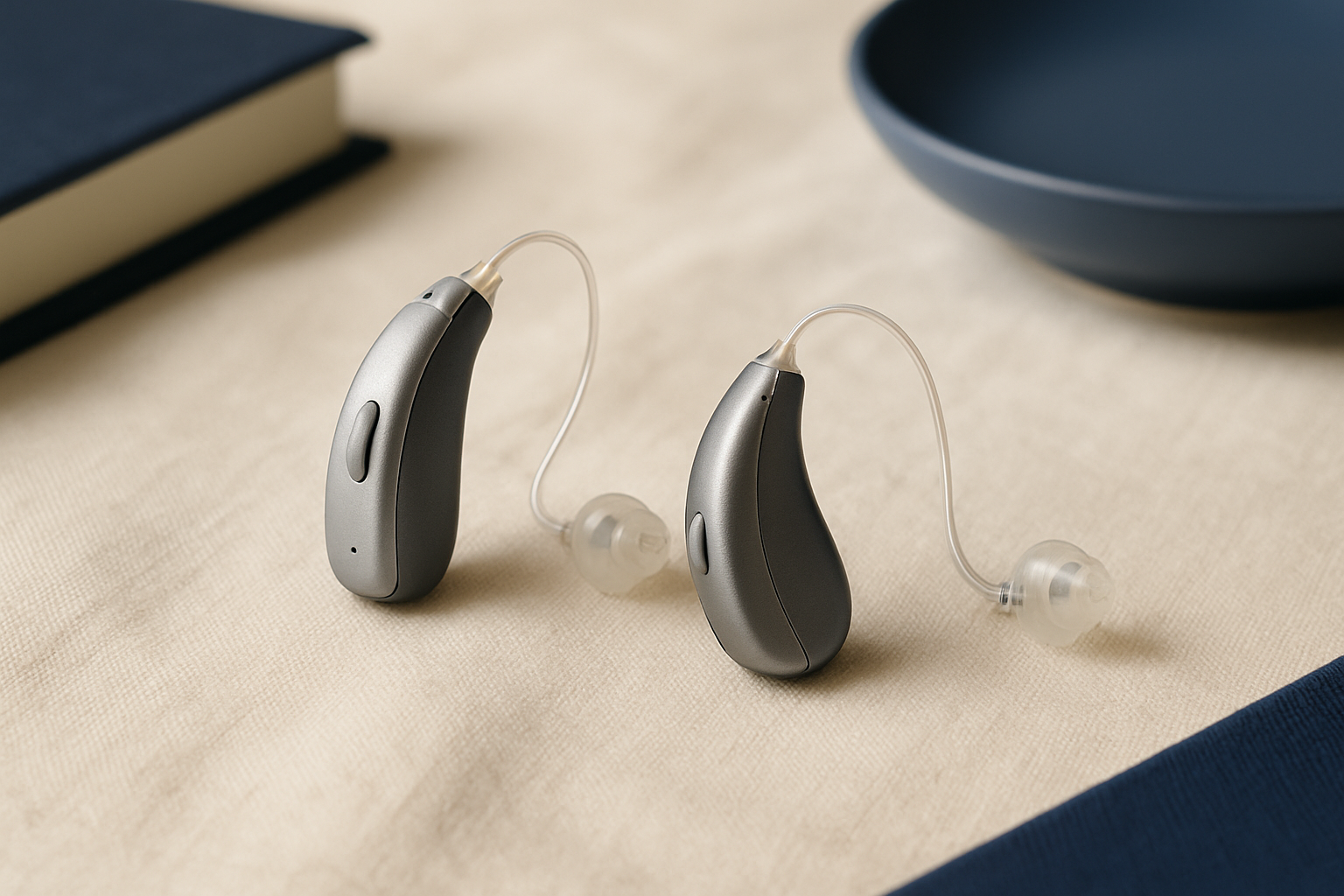
We're currently testing the top 5 Rechargeable hearing aids on the market.

Our audiologists and hearing instrument specialists are conducting full hands-on trials — measuring real-world battery life across full hearing days, evaluating charging case ergonomics, and running usability tests with first-time and experienced wearers. Each model is worn across multiple listening environments including quiet conversation, crowded restaurants, and outdoor settings.

What we evaluate

  • Battery life under real-world conditions — full-day wear without streaming, plus streaming endurance on iOS and Android
  • Charging case design and reliability — ease of insertion, charge-status indicators, portability, and case battery capacity
  • Sound quality and self-fit or professional-fit accuracy — speech clarity, background noise handling, and feedback suppression
  • Ease of use and companion app quality — daily handling, volume and program adjustments, iOS and Android app stability

No spam. One email when the comparison is live. Unsubscribe any time.

Models Being Tested 7 ★★★★★ Audiologist-led testing
Evaluation Active Subscribe for Verdict
Our Methodology

How We Evaluate Rechargeable Models

Battery Life Testing

We measure charge duration under real daily use — quiet conversation, phone calls, TV streaming, and outdoor wear — not just manufacturer-quoted figures in controlled conditions.

Charging Case & Ergonomics

Our testers evaluate lid ease, insertion with reduced manual dexterity, charge indicator clarity, and whether the case itself can recharge the aids multiple times away from a power outlet.

Sound Quality & Value

Licensed audiologists assess speech intelligibility, background noise suppression, and feedback control. We then weigh those scores against full cost of ownership to produce a value rating.

Read our full testing methodology to learn how we score every device.

★ Why Rechargeable Matters

Why Battery Freedom Changes the Hearing Aid Experience

Fumbling with tiny zinc-air batteries is one of the most cited frustrations among hearing aid wearers — particularly for adults with reduced dexterity. Rechargeable hearing aids eliminate that friction entirely. A well-designed charging case makes the routine as simple as placing a phone in a dock overnight, and the best models deliver a full day of clear sound on a single charge. Our evaluation focuses on which devices turn that promise into reliable, everyday reality.

Get the Verdict First
What We Score
5 criteria
★★★★★ Rigorous
Battery Life (real-world)
Charging Case Design
Sound Quality
App & Controls
Value for Money

We Look For

  • 24-hour real-world battery
  • Easy-open charging case
  • Low-dexterity friendly
  • Stable Bluetooth streaming
  • Clear charge indicators

Red Flags

  • Overstated battery claims
  • Fiddly case insertion
  • No case backup charge
Subscribe for Results

Written by Dr. Margaret Ellsworth, Lead Audiology Editor

★★★★★

Au.D., CCC-A — 22 years in clinical audiology and hearing aid fittings. Margaret spent two decades fitting hearing aids in private practice and a regional VA clinic. She specializes in age-related hearing loss and tinnitus management, and has personally fit more than 4,000 patients. Her reviews focus on what actually matters at the kitchen table: comfort, clarity, and follow-up support. Read more about our editorial team →

22+ years clinical experience 4,000+ patients fit Au.D., CCC-A Certified
Common Questions

Rechargeable Hearing Aids FAQ

What are rechargeable hearing aids and how do they work?
Rechargeable hearing aids use built-in lithium-ion batteries that are charged via a dedicated case or charging cradle rather than disposable zinc-air batteries. Most models provide a full day of use — typically 16 to 24 hours — on a single charge, and the charging case often provides additional backup power when you're away from a power outlet.
How long does the battery last on a rechargeable hearing aid?
Battery life varies by model and usage patterns, but most current rechargeable hearing aids deliver between 16 and 30 hours on a full charge without streaming. Continuous Bluetooth streaming typically reduces that to 12–18 hours. We evaluate real-world battery life as a primary criterion in our testing protocol.
Are rechargeable hearing aids suitable for severe hearing loss?
Many rechargeable models are designed for mild-to-moderately severe hearing loss. People with severe or profound loss may require higher-output devices, some of which also come in rechargeable form. Always confirm your audiogram results with the device's eligible loss range before purchasing, and consult a licensed audiologist.
How do rechargeable hearing aids compare in cost to battery-powered models?
Rechargeable hearing aids typically carry a slightly higher upfront cost, but eliminate the ongoing expense of disposable batteries — which can run $50–$150 per year for a pair. Over a three-to-five-year device lifespan, the total cost of ownership is often comparable or lower than battery-powered alternatives.
Can I still use a rechargeable hearing aid if the battery degrades over time?
Lithium-ion batteries in hearing aids typically retain 80% or more of their capacity after 500 charge cycles — roughly two to three years of daily use. Most manufacturers offer battery replacement or device trade-in programs after this point. We factor long-term battery durability and manufacturer support into our ratings.
Editorially Independent Privacy Protected Secure Browsing (HTTPS) Updated Each Evaluation Cycle Licensed Audiologist Reviews

Want to know which rechargeable hearing aid wins our 2026 evaluation?

Our editors are running hands-on evaluations across 7 models right now. Subscribe below and we'll notify you the moment our ranked comparison is published — no time pressure, no spam.

Subscribe — Get the Verdict First

⚡ One email when results land · Unsubscribe any time · Reviewed by licensed audiologists

Subscribe — Get the Verdict First