

HearingExperts logo
Hands-On Evaluations In Progress · Audiologist Reviewed

Best OTC Hearing Aids of 2026 — No Prescription Needed

We are comparing 6 FDA-cleared over-the-counter hearing aids across sound quality, companion app usability, self-fit accuracy, and price-to-performance value. Our editors are running hands-on evaluations now. Drop your email below to be notified the moment our verdict lands.

Evaluations in progress 6 OTC devices compared FDA-cleared devices only Editorially independent
Audiologist-Reviewed Methodology No Sponsored Rankings Updated Regularly
Editorial Disclosure: HearingExperts is an independent review site. We are not affiliated with or endorsed by any of the brands featured below. We may earn a commission when you purchase through links on this page — this never influences our rankings. Read full affiliate disclosure.
2026 Evaluation In Progress

The Best OTC Hearing Aids — Our Verdict Is on the Way

!We're currently testing the top 5 OTC Devices on the market.
In Testing
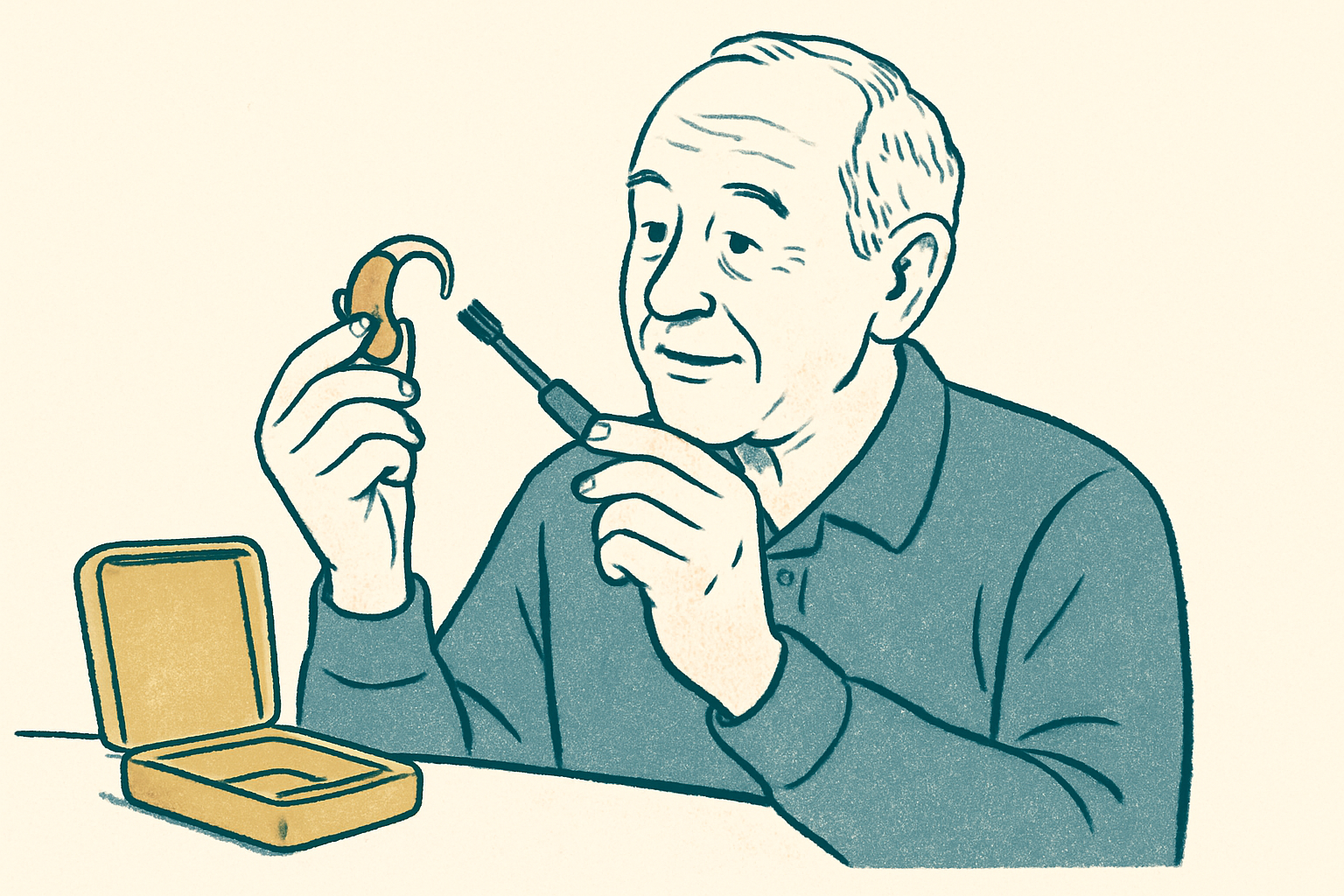
What we evaluate

  • FDA clearance and eligible loss range — We verify each device holds valid FDA clearance under the 2022 OTC Hearing Aid Act and confirm the stated hearing loss range the device is designed to address.
  • Sound quality and self-fit accuracy — Our audiologists assess amplification fidelity, frequency response, and how closely the app-guided self-fit matches a clinician-programmed fitting for the same audiogram.
  • Companion app on iOS and Android — We test each manufacturer's app for hearing assessment quality, program customization depth, Bluetooth stability, and ease of use for first-time wearers.
  • Price-to-performance value — We score each device on what you actually get for the cost, factoring in included accessories, warranty, return window, and the quality of after-sale support.

Our panel is conducting structured listening trials across quiet, noisy, and outdoor environments with adult wearers across a range of mild-to-moderate hearing loss profiles. We also run each companion app independently on both iOS and Android to assess real-world usability — not just spec-sheet claims.

No spam. One email when the full comparison is published. Unsubscribe anytime.

Testing Status Active ★★★★★ 6 devices in evaluation
Audiologist-Led · Real-World Subscribe — get the verdict first
Our Methodology

How We Evaluate OTC Hearing Aids

Sound Quality & Self-Fit

Our audiologists measure amplification fidelity across speech frequencies and compare each device's app-guided self-fit against a clinician-programmed target for the same hearing profile.

App Usability & Connectivity

We run each companion app independently on both iOS and Android, rating the hearing assessment, customization options, Bluetooth reliability, and how intuitive the interface is for older first-time users.

Value & After-Sale Support

We weigh price against what you actually receive — included accessories, trial period length, return policy, warranty, and the responsiveness of customer and audiologist support channels.

Read our full testing methodology to learn how we score every device.

★ 2026 OTC Evaluation

Why OTC Hearing Aids Are Worth a Serious Look in 2026

The 2022 FDA ruling that created the OTC category has matured. Today's leading OTC devices include directional microphones, Bluetooth streaming, and app-based fitting that rival prescription features — at a fraction of the upfront cost. Our job is to cut through the marketing and tell you which ones actually deliver.

Get the Verdict First
What We Measure
6 devices
★★★★★ Audiologist-Led
Sound Quality
Core
Self-Fit Accuracy
Core
App Usability
Core
Price-to-Performance
Core
After-Sale Support
Core

We Check

  • FDA clearance verified
  • Real-world sound trials
  • iOS & Android app tested
  • Return policy assessed
  • Warranty documented

We Exclude

  • Spec-only claims
  • Paid placement influence
Notify Me When Published

Written by Dr. Margaret Ellsworth, Lead Audiology Editor

★★★★★

Au.D., CCC-A — 22 years in clinical audiology and hearing aid fittings. Margaret spent two decades fitting hearing aids in private practice and a regional VA clinic. She specializes in age-related hearing loss and tinnitus management, and has personally fit more than 4,000 patients. Her reviews focus on what actually matters at the kitchen table: comfort, clarity, and follow-up support. Read more about our editorial team →

Au.D., CCC-A 4,000+ patients fit 22 years clinical experience
Common Questions

OTC Hearing Aid FAQ

What are OTC hearing aids and who are they for?
Over-the-counter (OTC) hearing aids are FDA-cleared devices you can purchase without a prescription or audiologist appointment. They are designed for adults with perceived mild-to-moderate hearing loss. If you have severe or profound hearing loss, are under 18, or have ear pain, drainage, or sudden hearing changes, you should consult a licensed audiologist before buying any hearing device.
How do OTC hearing aids compare to prescription hearing aids?
Modern OTC hearing aids have closed the gap considerably. Top-tier OTC devices now feature directional microphones, Bluetooth streaming, and app-based self-fitting that were once exclusive to prescription models. The main trade-offs are the absence of a professional fitting — which matters most for complex or asymmetric loss — and typically a lower maximum output level than prescription devices. For mild-to-moderate loss, a well-chosen OTC device can perform remarkably well.
Are OTC hearing aids FDA-cleared and safe to use?
Legitimate OTC hearing aids sold in the United States must hold FDA clearance under the 2022 OTC Hearing Aid Act. Always verify FDA clearance before purchasing. Every device we evaluate and recommend in our comparison carries verified FDA clearance — devices without it are excluded from our rankings entirely.
How do I self-fit an OTC hearing aid?
Most OTC hearing aids include a companion smartphone app that walks you through a short in-app hearing assessment. The app then applies a personalized amplification profile based on your responses. Some devices also offer preset environment programs — for noisy restaurants, quiet conversations, or outdoor settings. We evaluate app quality and self-fit accuracy as core criteria in every OTC hearing aid review.
What is the typical price range for OTC hearing aids in 2026?
Quality OTC hearing aids generally range from around $200 to $1,600 per pair. The sweet spot for most informed buyers — where sound quality, app functionality, and after-sale support converge — tends to be in the $600–$1,200 range. If cost is a primary concern, our budget hearing aids guide covers well-reviewed options under $1,000.
Editorially Independent Privacy Protected Secure Browsing (HTTPS) Updated Regularly Audiologist-Led Reviews

Want to know which OTC hearing aid earns our top pick?

Our audiologists are completing hands-on evaluations of the leading FDA-cleared OTC devices right now. Subscribe below and we'll notify you the moment our full ranked comparison is published — no time commitment, no spam.

Subscribe — get the verdict first

⚡ Audiologist-reviewed · FDA-cleared devices only · Independent editorial

Subscribe — get the verdict first