

HearingExperts logo
Hands-On Evaluation In Progress · Audiologist Reviewed

Best Invisible Hearing Aids for 2026 — CIC & IIC Devices Tested

We're putting the top CIC and IIC hearing aids through a structured evaluation across 9 participants with mild-to-moderate hearing loss — scoring each device on how naturally it sits in the canal, how straightforward insertion is, and whether comfort holds up through a full day of wear. Here's what our panel is finding.

Evaluation currently in progress 9 real-world participants 5 devices under evaluation Editorially independent
Audiologist-Led Methodology No Sponsored Rankings Updated Regularly
Editorial Disclosure: HearingExperts is an independent review site. We are not affiliated with or endorsed by any of the brands featured below. We may earn a commission when you purchase through links on this page — this never influences our rankings. Read full affiliate disclosure.
2026 Evaluation in Progress

Top Invisible Fit Hearing Aids — Verdict Arriving Soon

!We're Currently Testing the Top 5 Invisible Fit Devices on the Market
In Progress
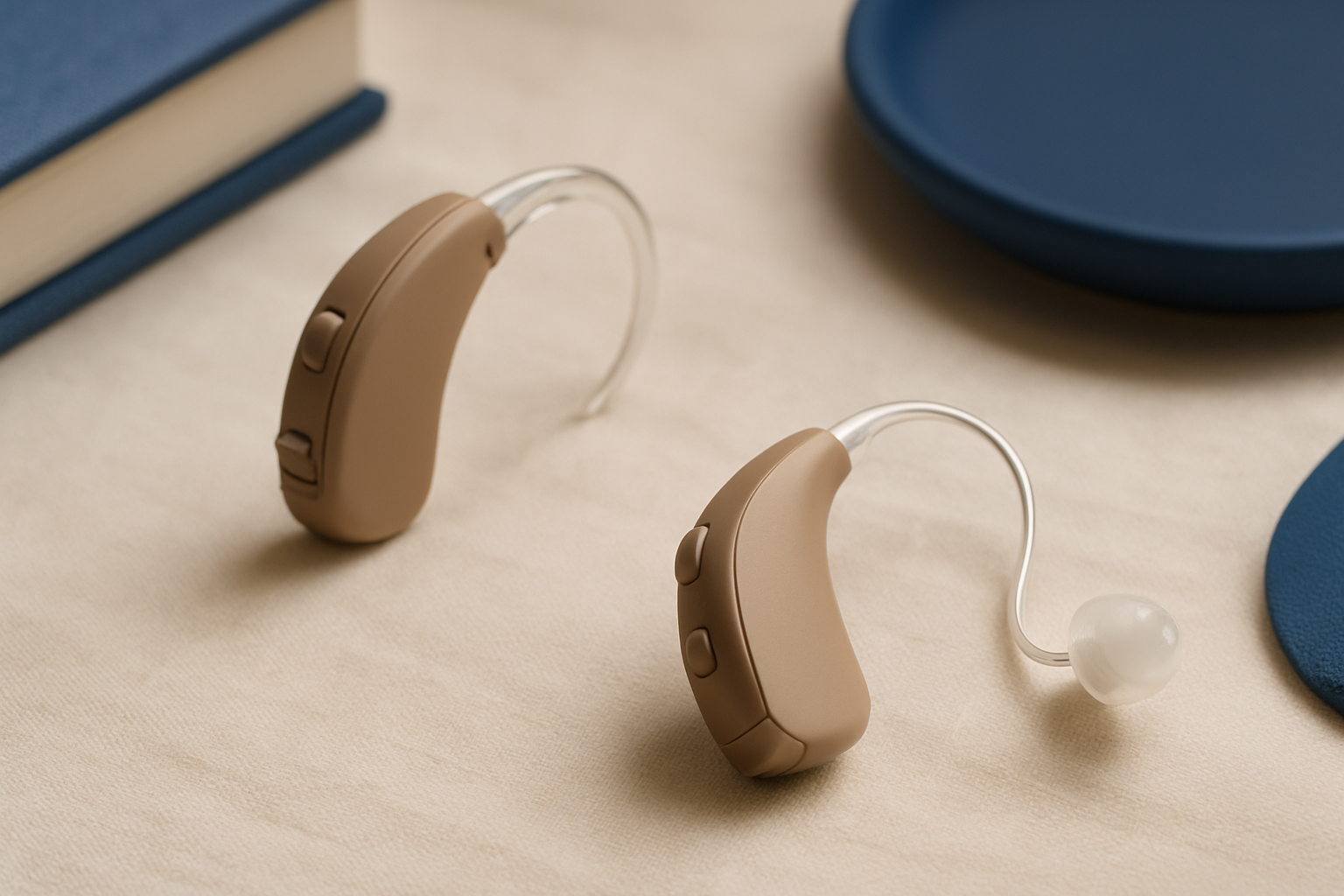
We're currently testing the top 5 Invisible Fit devices on the market.

Our audiologist panel is conducting a structured, full-day wear evaluation of the leading CIC and IIC hearing aids across 9 participants representing a range of mild-to-moderate hearing loss profiles and ear canal anatomies. Each device is worn for complete waking days before scoring to ensure comfort ratings reflect genuine long-term use, not first impressions. We are also measuring ease of insertion and removal, since dexterity matters as much as fit depth for real-world wearers.

What we evaluate

  • FDA clearance and eligible hearing loss range — we confirm each device is cleared for its stated indication and appropriate for mild-to-moderate loss profiles.
  • Canal fit naturalness and all-day comfort — rated by participants after full days of wear across varied listening environments including quiet, conversation, and outdoor settings.
  • Insertion and removal ease — scored across participants with varying dexterity levels, since the smallest IIC devices require precise handling.
  • Sound quality and speech clarity — assessed in real-world conditions including background noise, one-on-one conversation, and TV listening.
Our Methodology

How We Evaluate Invisible Hearing Aids

Canal Fit & Comfort

Participants rate fit naturalness and comfort at the end of each full day of wear — not just at insertion. We track comfort scores over multiple days to catch any drift or irritation that only appears with extended use.

Insertion & Handling

We time insertion and removal across participants with different dexterity levels and finger sizes. CIC and IIC devices require precise placement — ease of handling is a real barrier for many wearers and forms a major part of our scoring.

Sound Quality & Value

Speech clarity is rated in quiet, conversational, and moderately noisy settings. We then factor in device cost, fitting support quality, and warranty terms to produce a final price-to-performance score.

Read our full testing methodology to learn how we score every device.

★ What to Expect

Why Invisible Hearing Aids Deserve a Rigorous, Independent Review

The invisible hearing aid category is crowded with marketing claims and aspirational photography. Canal fit is deeply individual — what disappears in one ear sits visibly in another. Our panel-based approach is designed to cut through the noise and give you honest, wearer-verified verdicts before you commit to a device you'll wear every day.

Read Our Methodology
What We Score
5 criteria
★★★★★ Audiologist-Led
Canal Fit Naturalness
Scored
All-Day Comfort
Scored
Insertion Ease
Scored
Speech Clarity
Scored
Price-to-Performance
Scored

Why CIC/IIC

  • Virtually invisible
  • Natural sound directionality
  • No behind-ear bulk
  • Fits active lifestyles

Key Considerations

  • Canal anatomy limits eligibility
  • Smaller batteries
  • Dexterity demands
Get Notified When We Publish

Written by Dr. Margaret Ellsworth, Lead Audiology Editor

★★★★★

Au.D., CCC-A — 22 years in clinical audiology and hearing aid fittings. Margaret spent two decades fitting hearing aids in private practice and a regional VA clinic. She specializes in age-related hearing loss and tinnitus management, and has personally fit more than 4,000 patients. Her reviews focus on what actually matters at the kitchen table: comfort, clarity, and follow-up support. Read more about our editorial team →

Au.D., CCC-A 4,000+ patients fit 22 years clinical audiology
Common Questions

Invisible Hearing Aids FAQ

What is a CIC or IIC hearing aid?
CIC stands for Completely-in-Canal and IIC stands for Invisible-in-Canal. Both styles sit inside the ear canal rather than behind the ear, making them the least visible hearing aid options available. IIC devices sit deepest and are often undetectable to others, while CIC devices sit slightly shallower but remain largely hidden from view during normal interaction.
Who is a good candidate for invisible hearing aids?
Invisible CIC and IIC hearing aids are best suited for adults with mild-to-moderate hearing loss who have ear canals large enough to accommodate the device. A licensed audiologist should evaluate canal anatomy and your specific hearing profile before recommending an invisible style — not every ear is anatomically suited for the deepest-fit IIC designs, and some canals are too narrow or curved for a safe, stable fit.
Are invisible hearing aids as powerful as larger styles?
For mild-to-moderate hearing loss, CIC and IIC devices can deliver excellent sound quality and speech clarity comparable to larger styles. However, because of their small housing they typically cannot accommodate the output power required for severe or profound hearing loss. If your audiogram shows significant loss, a behind-the-ear or receiver-in-canal style will generally provide better amplification and more fitting flexibility.
How long do invisible hearing aids stay comfortable during the day?
Comfort depends heavily on the quality of the custom impression or the accuracy of a self-fit ear tip. In our testing panel, well-fitted CIC devices were rated comfortable for full-day wear by most participants after an adjustment period. Initial acclimatisation of one to two weeks is common as the ear adjusts to a device seated in the canal — mild awareness of the device is normal early on and typically fades.
Do invisible hearing aids connect to smartphones via Bluetooth?
Some CIC devices include Bluetooth connectivity for streaming audio from phones and TVs; IIC devices are generally too small to incorporate wireless radios. If smartphone streaming or direct TV audio is a priority for you, a slightly larger CIC model with Bluetooth support may be a better choice than the smallest IIC options. Our full comparison will note Bluetooth capability and iOS/Android compatibility for every device we evaluate.
Editorially Independent Privacy Protected Secure Browsing (HTTPS) Updated Regularly Real Wearer Panel

Want to know which invisible hearing aid our panel recommends?

Our audiologist editors are completing hands-on evaluations across 9 participants right now. Subscribe and we'll send you our full verdict the moment it's published — no marketing, no noise.

Subscribe — Get the Verdict First

⚡ Independently reviewed · Audiologist-led panel · No sponsored rankings

Subscribe — get the verdict first